


PHYSIOTHERAPY – WE OFFER A HOLISTIC APPROACH IN THE ASSESSMENT AND CARE OF YOUR CONDITIONS
What is physiotherapy?
Physiotherapy is a healthcare profession that assesses, diagnoses, treats, and works to prevent disease and disability through physical means. Physiotherapy treatments are an effective means for the treatment of disease and disability. Physiotherapists use only evidence based manual therapy and various other treatment techniques. They are experts in movement and function who work in partnership with their patients, assisting them to overcome movement disorders, which may have been present form birth, acquired through accident or injury, or are the result of ageing or lifestyle (stress, poor posture and ergonomics).
Physiotherapy aims to empower the patient, enabling them to reach their goals, eliminate or minimise pain and dysfunction and make wise health and lifestyle changes. Physiotherapists spend a lot of energy investigating the cause of a dysfunction, and addressing those factors as to avoid re-occurrence of an injury/problem.
Our physiotherapy treatments
At Fransien Rossouw Physiotherapy practice, our treatment techniques include various methods and procedures that will help the patient recover to his/her full potential and/or gain full mobility again. Our techniques include selective soft tissue manipulation, massage, myofascial release, dry needling, spinal mobilisation, spinal manipulation, muscle energy techniques, exercise rehabilitation, stretching, Pilates, movement therapy, electrotherapy, ice or heat therapy, taping/sports strapping, bracing, cervical traction, postural training, ergonomic assessment & adjustments, neural mobilisation, chronic pain education, chest therapy (nebulisation, percussions, postural drainage, suction), relaxation techniques/breathing technique training.

Physiotherapy

Amputee Rehabilitation

Golf Swings Basics
Physiotherapy sessions
Typical first session: Upon your first session, a thorough history will be taken as part of the subjective interview. The aim of the interview is to get a holistic picture of you as the patient and your impairment, to ascertain what your expectations and goals are, and to streamline the physical assessment. A thorough physical assessment is then performed with the use of the appropriate clinical assessment techniques, enabling us to rule out certain conditions, get closer to the diagnosis whilst looking for underlying causes. Once a hypothesis has been formed, the physiotherapist will explain to you what her understanding of the problem is, and how she proposes to treat it. Treatment will then commence.
Follow-up sessions: At follow-up sessions, short re-assessments may be performed, where after the appropriate treatment and rehabilitative exercises will commence.
The number of follow-up sessions, as well as how far apart these appointments are booked, depends on the type of condition that is being treated. It also depends on how compliant the patient is in performing their home exercises, avoiding certain aggravating activities and correct medication use where applicable.
Appointment duration:Physiotherapy sessions at this practice are 45 minutes in duration.
Fees: The practice charges fees that are equivalent to most medical aid rates. We do not submit to medical aids, but will provide you with an invoice to claim back from your medical aid yourself. You are therefore personally responsible for the payment of your account after each session. Card facilities are available.
Frequently asked questions about physiotherapy
What does the physiotherapy course include?
Physiotherapy is a four year Bachelor of Science honours degree. During this intense four year course we study human physiology, anatomy, pathology, physics and chemistry, enabling us to have an in-depth understanding of how our manual therapy techniques and exercise therapy will affect the human body.
The course also includes subjects such as psychology, sociology and medical anthropology, enabling us to treat a person as a whole (holistically) and not just look at the problem in isolation.
We are taught in-depth about the assessment of human biomechanics and movement dynamics. How to find the ‘missing components’ and how to address it – be it with exercise therapy, manual therapy or lifestyle and ergonomic changes.
We are taught clinically how to assess what normal movement or function is, and to recognise what is abnormal or dysfunctional in the human body. This can be applied in all fields of physiotherapy, be it orthopaedics (peripheral nerves, muscle, joint and skeletal pathology), sports rehabilitation (typical sporting injuries and sports specific conditioning), neurology (spinal cord injuries, strokes, head injuries), respiratory (chest/breathing problems), women’s health (pelvic floor dysfunction, incontinence), medical and surgical (rehabilitation needed during or after illness or surgery), ICU (intensive care unit) or paediatrics (children).
What is the difference between a physiotherapist and a biokineticist?
The information here below has been obtained directly from the Health Professional Council website:
A biokineticist
A biokineticist is a health care professional registered under article 32 (1) (a) of the Act as a biokineticist. A qualified biokineticist is an exercise specialist whose goal is to improve the physical condition and quality of life of a patient through a physical assessment and the prescription of a scientifically-based physical activity programme.
The profession of biokinetics is concerned with preventive health care, the maintenance of physical abilities and final phase rehabilitation. Final phase rehabilitation refers to the period or phase in the rehabilitation process where physical activity and physical conditioning is part of the primary therapeutic modality. These goals are achieved by means of scientifically-based physical activity programmes, i.e. specific and individual-oriented physical training programmes based on the individual’s physical condition, compiled and supervised by a qualified biokineticist.
A physiotherapist
A physiotherapist is a health care professional who specialises in helping patients maximise their movement and function potential, especially after an injury, accident or surgery. They can also help prevent sporting and work related injuries through evidence-based manual therapy.
Physiotherapy treatment includes giving the following movement and exercise therapy:
- Passive movements
- Relaxed passive movements
- Mobilisation techniques – spinal and peripheral
- Manipulation – spinal and peripheral without anaesthetic
- Soft tissue stretching
- Traction – spinal and peripheral
- Active movements
- Facilitation:
- Muscle contraction by the use of cold and sensory stimulation, both epicritic and proprioceptive, followed by activation.
- Facilitation of basic and selective movement patterns and reflex mechanisms, including automatic righting, and balance and equilibrium reactions in the developmental sequence.
- Inhibition of abnormal sensory input, muscle tone, reflex mechanisms or associated reactions.
- Facilitation:
- Assisted exercises: These exercises are done by means of manual, mechanical and hydrotherapy techniques.
- Free exercises:These are exercises and activities (both subjective and objective) that are done to obtain relaxation, increase joint range, re-educate muscle function, increase muscle power and endurance, correct posture and re-educate postural and gait mechanisms.
- Resisted exercises:
- Resisted exercises done by manual, mechanical and hydrotherapy techniques.
- Resisted exercises done by power and endurance programmes.
- Re-education of functional activities:
- Re-education of and rehabilitation in functional activities such as basic movement patterns and gait (both assisted and unassisted).
- Transference, wheelchair activities and other motor activities required for daily living and sport.
- The use of gymnasia, gymnastic therapeutic apparatus, specially constructed children’s apparatus, toys and adapted training circuits.
- Sporting activities:These activities include swimming, riding and wheelchair sports.
- Group activities: These activities include activities such as ward classes, out-patient classes, pre-natal and post-natal classes, remedial games.
- Breathing exercises: Breathing exercises, postural drainage, mobilising exercises for the thorax, inhalation therapy, including the use of intermittent positive pressure, section and respiratory function tests.
- Splints, supports and prostheses:
- Training in the use of splints, supports and prostheses for motor activities, including isolated contraction for the activation of powered splints.
- The adaptation of all these methods for all age groups, including infants, children, adolescents and the aged.
- The use of various massage techniques, including transverse frictions and connective tissue massage.
- The giving of electrotherapy, including:
- High frequency currents
- Low frequency currents
- Ultrasound
- Radiation (excluding X-rays and cosmic rays)
- The application of heat and cold
- The therapeutic use of water (hydrotherapy)
- Mechanical aids:
- The making and application of splints and supports.
- The application of braces, prostheses and other therapeutic and supportive devices, including the selection of wheelchairs.
What is the difference between acupuncture and dry needling?
Acupuncture involves the insertion of extremely thin needles through the skin at strategic points on the body. A key component of traditional Chinese medicine, acupuncture is most commonly used to treat pain.
Traditional Chinese medicine explains acupuncture as a technique for balancing the flow of energy or life force, known as qi or chi, believed to flow through pathways (meridians) in the body. By inserting needles into specific points along these meridians, acupuncture practitioners believe that your energy flow will re-balance. Acupuncture is typically more superficial, meaning that the needle does not go deep into the muscle.
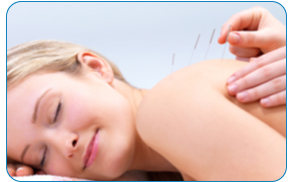

The term dry needling is used to differentiate the use of needling in a western physiological paradigm from the use of needling in an oriental paradigm, which is referred to as acupuncture.
Dry needling is a skilled intervention that uses a thin filiform needle to penetrate the skin and stimulate underlying myofascial trigger points, such as muscular and connective tissues, for the management of neuro-musculo-skeletal pain and movement impairments. Dry needling is a technique used to treat dysfunctions in skeletal muscle, fascia, and connective tissue, while diminishing persistent peripheral nociceptive input. It is also used to reduce or restore impairments of body structure and function, leading to improved activity and participation.
During dry needling, the patient is positioned appropriately, where after the needle is inserted into the affected muscle’s trigger point. The needle is inserted as deeply as necessary to touch the affected muscle’s trigger point. The needle is most often inserted deeper than in the case of acupuncture. A trigger response (sudden small muscle contraction) is often provoked when the needle hits the ‘knot’, which is a positive sign. The patient may experience some discomfort for a few seconds, but it is most often described by patients as an unfamiliar sensation. Most people who are familiar with dry needling are happy to receive it again, even though they may have been hesitant/scared to try it at first, as they know it is not really sore.
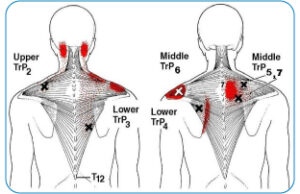
Trigger points…


When should I see a physiotherapist?
There are many instances where it is appropriate to seek the help of a physiotherapist, some of these are mentioned below:
- If you have swelling, bruising or deformity of a body part.
- If you experience muscle spasm or stiffness.
- If you are experiencing joint stiffness and/or aches and pains (particularly if your symptoms have persisted for more than 3 days).
- If you have chronic pain.
- If you are limping or protecting a limb due to pain.
- If you are experiencing pins and needles, or numbness.
- If your limbs collapse or give way occasionally.
- If you have postural problems.
- If you need advice on improving strength, flexibility, balance or fitness.
- If you need advice on injury prevention or other aspects of musculoskeletal health.
- If you require treatment for an acute injury.
- If you wish to improve your physical performance for sport.
- If you are planning a return to sport or activity following a prolonged period of inactivity.
- If you need post-operative rehabilitation.
As a general rule, if you are unsure whether you need the help of a physiotherapist, it is always better to consult a physiotherapist rather than not seek advice.
What is Pilates?
Pilates is a form of physical exercise that focuses on posture, core stability, balance, control, strength, flexibility, and breathing. The Pilates Method was developed in Germany by Joseph Pilates in the early 20th century. These days, Clinical Pilates is often used in conjunction with physiotherapy as a means of treating a variety of injuries, particularly those of the neck and back. This is based on literature that demonstrates strong evidence to support the use of therapeutic exercise in the management of patients with injuries, particularly lower back pain. Recent research advocates the retraining of the deep stabilising muscles for patients with lower back pain. Clinical Pilates focuses on the retraining and recruitment of these stabilising muscles (core stability) as well as improving posture, strength and flexibility.
Although Pilates can be extremely beneficial for patients with certain injuries, it needs to be specific to the individual and not used as a generic tool for everyone. Clinical Pilates, which differs from generic Pilate’s classes, identifies the key issues by applying carefully selected exercises to patients with specific injuries. This ensures optimal gains whilst minimising the likelihood of injury aggravation. If you are interested in commencing Pilates for your injury, it is essential to have a review with a physiotherapist to assess the suitability of a core stability program for you.
What is Yoga?
The practice of yoga originated in India more than 5000 years ago. It has evolved over the centuries and through cultures into many different types of yoga: Ashtanga, Kripalu, Bikram and Vineyasa, to name a few. In yoga, a strong emphasis is placed on the connection between mind, body and spirit.
As an exercise form, yoga uses different movements, stretches, breathing techniques and stationary postures to improve balance, endurance, strength and flexibility, while promoting relaxation. The exercises focus on broad muscle groups, and the movements are generally fluent in nature. Classes can range from gentle and slow, to challenging, fast paced and strenuous.
I have a back problem and my doctor recommended I start doing rehab. I haven’t done much exercise for quite a while. Should I do Pilates or Yoga?
It depends on the severity and nature of your back problem, but many back problems would benefit more from and be safer with Pilates, at least initially. Yoga is a wonderful form of exercise, but when done in a class setup especially, there is a risk that you may injure your lower back. This is because many of the stretches and movements done in yoga can be quite advanced if you are not familiar with it or conditioned for it. Let’s say you have a lower back disc problem because you spend eight hours a day sitting at a desk and then sit in your car for another hour or two. Now you go to a yoga class and are instructed to do a forward bend type of stretch and reach even further… You may think you are mostly stretching your hamstring, but your disc (and neural tissue) may likely become more ‘overstretched’ and inflamed in the process.
If you go to a Pilates class (or even better, a one-on-one Pilates session), the focus is more on learning to stabilise certain parts of the body, for example the spine, whilst moving and stretching another. In this way you will learn to use your core/stabilising muscles to protect your back in a healthy way, dynamically and statically.
It is best to be assessed by a physiotherapist initially, especially if you have a lingering injury or back problem, before commencing with yoga or Pilates. Both exercise forms are great for your health, but the physiotherapist will help you make an informed decision on which suits you better at the time, as well as which level (beginner, intermediate, advanced) is most appropriate.
When should I use ice?
Ice, or cold therapy, should be used during the first three to six days following an acute injury where a joint or muscle is swollen, red and hot. The application time should be five to ten minutes. In between applications your skin should return to normal skin temperature (compared to the other side’s limb that is not injured), before re-applying the ice pack. Make sure to wrap the ice pack in a thin towel or cloth as to avoid ‘ice-burn’ or frostbite on the skin.
When should I use heat?
Heat, for example a hot pack, should be used in the absence of inflammation. In an acute injury, the inflammatory phase of healing may last up to approximately 10 days, so heat should only be used after the inflammation has passed. Heat is used to relieve muscle spasm, reduce tension pain and may speed up healing of tissue by dilating capillary blood vessels, thereby bringing more blood to the area. It can be applied for 10 to 30 minutes at a time, up to six times a day, if the application is spread out through the day. One should be careful not to burn one’s skin. If a person has a nerve injury (or spinal cord injury) and their sensation is impaired, it is best not to use a hot pack as they might not feel when their skin becomes too warm. Many people have sustained burn-wounds from being negligent with a hot pack, especially when falling asleep with the hot pack on them.
Why do I get muscle cramps and how can I prevent them?
The more well-known reasons for getting a muscle cramp, includes:
- low electrolyte levels
- dehydration
- extreme environmental temperatures
- overtraining
- poor recovery between training sessions
- incorrect foot wear
- muscle tightness
- lack of fitness or conditioning
- certain chronic medications
The above may all be true, but why then do you still get cramps if you have stretched properly, stay hydrated, are well-conditioned, and addressed all other obvious factors? Other less well-known, but possibly more concerning, reasons for muscle cramps may include:
- nerve tension and fatigue
- nerve root irritation at the spine
- muscle imbalances
- muscle weakness
- myofascial restriction
If a person has already taken all the obvious steps to avoid cramps, but they still persist, it is advisable to consult with a physiotherapist in order to identify the underlying cause.
Do I need orthotics/insoles?
The use of orthotics is often indicated in patients with abnormal lower limb alignment and biomechanics, particularly of the feet, as well as in the case of a mild leg length discrepancy. That is, they stand, walk or run, with less than ideal posture or movement patterns. Lower limb biomechanical abnormalities are often associated with the development of lower limb, pelvic or lower back injuries.
One of the most common biomechanical abnormalities seen in clinical practice is over pronated feet, or flat feet. Flat feet frequently contribute to the development of numerous injuries. However, if one has flat feet, one does not necessarily need orthotics. Many people who have flat feet never develop an injury associated with their foot posture. Usually, orthotics are only indicated when a patient presents with abnormal lower limb mechanics and they have an injury that is related to their poor biomechanics.
It is important to note that other factors related to the development of the injury also need to be addressed to ensure an optimal outcome. Wearing orthotics alone is usually an inadequate means of treatment to completely recover from an injury. Physiotherapy assessment and treatment can assist in identifying other contributing factors, such as muscle tightness, weakness and joint stiffness or lifestyle factors and can correct these through appropriate treatment and exercise.
The prescription of orthotics in patients suffering from injury is usually indicated if foot postural taping (i.e. supporting the arch) causes a reduction in symptoms. Physiotherapists, orthotists and podiatrists are experts in assessing the need for orthotics and should be consulted to assess the suitability of orthotics for a particular condition.
It is recommended that a pair of orthotics are custom made for you, as no-one’s feet are exactly the same as another person’s, and your right foot may not have the same problems and shape as the left.
What is Tennis Elbow?
Tennis elbow, also known as ‘lateral epicondylitis’ or ‘wrist extensor tendonitis’ is a well-known condition where the communal tendon of the wrist and finger extensors become inflamed on the spot where it inserts onto the lateral epicondyle of the humerus. This condition does not only occur in tennis players, of course. It can affect anyone that uses their wrist and finger extensor muscle group repetitively. Even a person doing computer work with mostly mouse-work commonly develop wrist extensor tendonitis.
Any sport or activity where something is gripped (a racquet, dumbbell, screwdriver, knife, etc.) and used forcefully or repetitively can lead to tennis elbow. The smaller the circumference of the handle that is gripped, the bigger the chance of tendonitis. When an object is gripped tightly, the muscles running along the posterior aspect of the fingers, hand and wrist (and runs all the way to the elbow), are stretched and tensed up whilst providing stability to the hand grasp. Add to that a repetitive movement, big or small, and one may cause strain on the tendon.
There are usually various contributing factors that predisposes a person to this injury, otherwise everyone would suffer from it! These contributing factors may include lack of mobility in the neck or shoulder, poor connective tissue mobility in the upper body, shortening of certain muscles, or neural tension. Once again, poor posture and ergonomics may also contribute.